

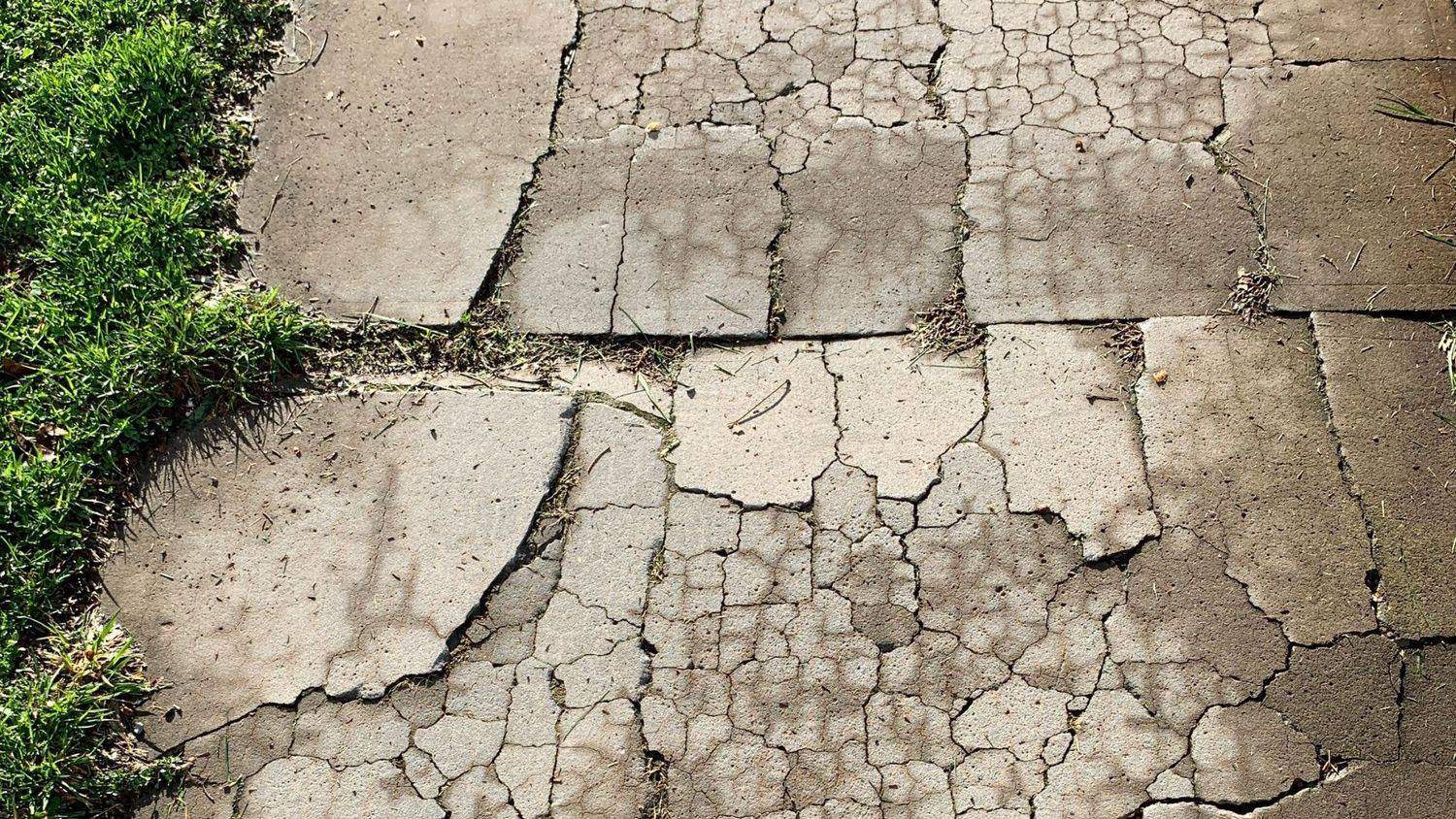
A hairline crack in a sidewalk panel does not look urgent in October. By February, after a few freeze-thaw cycles and a couple of rounds of de-icing salt, that same crack can be a raised, broken panel that a tenant trips over on their way into the building. Concrete does not fail gradually the way asphalt often does. It tends to hold steady, then fail suddenly once water gets into a crack and freezes. Late fall is the last real window to catch that damage before winter makes it worse.
In this article:
- Why Freeze-Thaw Damage Accelerates Once Winter Arrives
- Curbs: The First Thing to Crack and the Easiest to Overlook
- Sidewalks and the Liability Risk Hiding in Small Cracks
- Loading Docks, Dumpster Pads, and Industrial Flooring Under Winter Stress
- Warning Signs to Address Before the First Freeze
- Concrete Repair or Full Replacement: How to Decide
- Why Pairing Concrete Work With Asphalt Repairs Saves a Trip
- Scheduling Repairs Before Contractors Book Up for Spring
- Protecting Your Property Through the Coldest Months
Why Freeze-Thaw Damage Accelerates Once Winter Arrives
Concrete is porous, even when it looks solid. Water finds its way into small cracks and gaps, and when temperatures drop below freezing overnight, that water expands as it turns to ice. Expanding water inside a crack pushes outward with enough force to widen the crack a little more with every freeze. Once the ice melts during the day, water gets in a little further, and the cycle repeats. A crack that started as a cosmetic issue in October can become a structural one by the time spring arrives.
De-icing salt makes the problem worse. Salt lowers the freezing point of water sitting in a crack, which sounds like it should help, but it also increases the number of freeze-thaw cycles a section of concrete goes through over a winter, since the water refreezes and thaws more often as temperatures fluctuate around that lower point.
Curbs: The First Thing to Crack and the Easiest to Overlook
Curbs take a beating that most property managers never think about. They absorb the impact every time a delivery truck clips a corner, every time a plow blade scrapes along the edge of a parking lot during the first snow, and every drop of runoff that channels along them during a storm. A curb that is already chipped or separated from the adjoining asphalt at the start of winter rarely makes it through the season without getting worse.
Because curbs are a smaller, less visible repair than a full sidewalk or parking lot, they tend to get pushed to the bottom of a maintenance list. That is usually a mistake. A curb failure lets water run where it should not, which speeds up damage to the pavement edge next to it as well.
Sidewalks and the Liability Risk Hiding in Small Cracks
Sidewalks carry a different kind of risk than curbs or parking lots. A cracked or heaved sidewalk panel is a trip hazard, and property owners can be held liable when someone is injured on a walkway that was not properly maintained. Winter raises that risk further, since snow and ice can hide an uneven panel that would otherwise be obvious to a pedestrian walking by.
An uneven panel, a settled section near a building entrance, or a joint that has widened enough to catch a shoe or a wheelchair caster are all worth fixing before the first snowfall, both for safety and to reduce exposure if an incident does happen.
Loading Docks, Dumpster Pads, and Industrial Flooring Under Winter Stress
Heavy-use concrete areas face a different kind of winter stress. Loading docks and dumpster pads deal with constant point loads from trucks and equipment, and any existing cracking gets worse quickly once freeze-thaw cycles start working on it under that repeated weight. Industrial flooring inside a warehouse or distribution center is less exposed to freezing directly, but the areas where that flooring meets an exterior dock or bay door are vulnerable, since temperature swings at that transition point can crack the slab right at the seam.
These are also the areas where downtime costs the most. A cracked or heaving dock apron can slow down truck traffic or make a loading area unsafe to use, which affects operations well beyond the cost of the repair itself.
Warning Signs to Address Before the First Freeze
Most concrete damage gives some warning before it becomes a bigger problem. A short walk around the property in late fall is usually enough to catch it.
Common warning signs include:
- Hairline cracks that have visibly widened since earlier in the year
- Spalling or flaking on the surface, where small chips of concrete are breaking away
- Curbs that have separated or settled away from the adjoining asphalt
- Sidewalk panels that are uneven or have shifted at the joints
- Water pooling against a building foundation instead of draining away from it
Any of these signs left unaddressed tends to expand quickly once the temperature starts dropping below freezing overnight.
Concrete Repair or Full Replacement: How to Decide
The team at Huntington Paving often hears the assumption that concrete needs less attention than asphalt, since it does not develop potholes the same way. In practice, concrete is more brittle than asphalt, and once it cracks, that damage tends to progress faster, not slower, especially with a winter freeze-thaw cycle working against it. Treating concrete as maintenance-free is one of the more common ways property managers end up with a bigger repair bill the following spring.
A section with isolated cracking and a stable base underneath can often be patched or resurfaced. A section that has settled, heaved, or cracked through multiple panels usually needs to be removed and repoured, since patched concrete rarely matches the strength or appearance of the surrounding slab. A site visit is the most reliable way to tell which situation applies, and a free site inspection and quote can identify what needs attention before the ground freezes and repair options become more limited.
Why Pairing Concrete Work With Asphalt Repairs Saves a Trip
Curbs, sidewalks, and dumpster pads rarely exist in isolation from the surrounding asphalt. A curb repair often needs to tie back into the parking lot edge next to it, and a sidewalk near a loading area may butt up against asphalt that also needs attention before winter. Scheduling concrete and masonry repairs at the same time as any asphalt repair work means a crew is only mobilizing once, and the transitions between surfaces get built to match instead of being patched separately by different crews on different timelines.
Scheduling Repairs Before Contractors Book Up for Spring
Concrete needs a minimum curing temperature to set properly, which puts a real deadline on late-season repairs. Once overnight temperatures drop consistently below freezing, pouring new concrete becomes difficult to do reliably, and most contractors stop taking on new concrete work until temperatures recover in spring. That means the window for fall concrete repairs closes earlier than most property managers expect, often weeks before winter actually arrives.
Waiting until spring to address fall damage also means competing with every other property trying to book the same limited number of contractors at the same time, right after a winter that likely made the damage worse.
Protecting Your Property Through the Coldest Months
Concrete and masonry repairs completed before the first hard freeze give a property the best chance of making it through winter without new damage or liability exposure. Curbs that are already solid resist plow damage better, sidewalks that are already even stay safer under snow and ice, and loading areas that are already sound keep operations running without unexpected downtime. The properties that come through winter with the least damage are almost always the ones that addressed small cracks and settling before the season started, not after.
270 Broadway, Huntington Station, NY 11746
(631) 423-3251
Schedule your free site inspection today and get your curbs, sidewalks, and masonry ready before winter.