

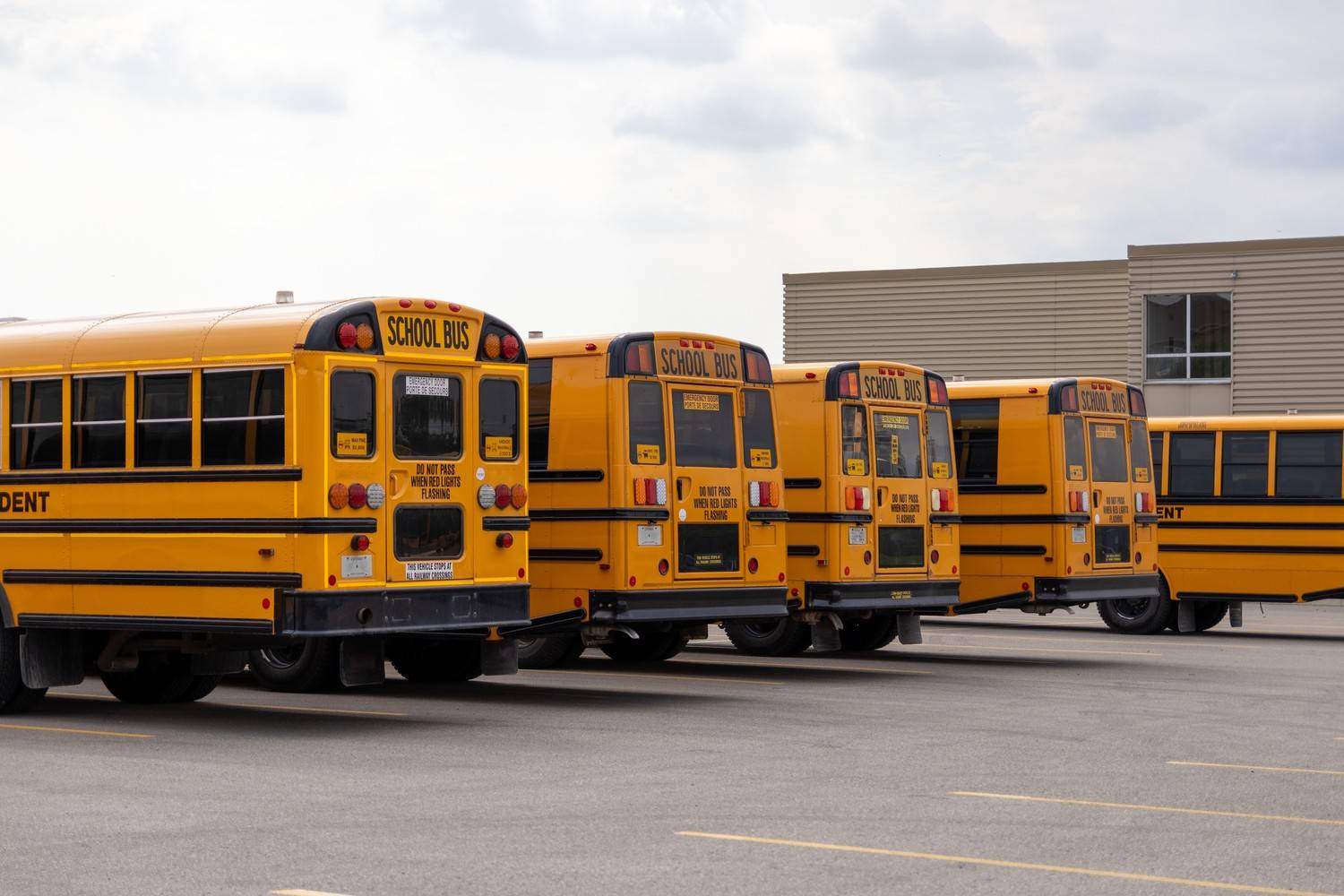
The first week of September turns a quiet summer parking lot into a different surface entirely. Buses idle in loading zones, parents circle through drop-off lanes twice a day, and delivery trucks restock cafeterias and supply closets on tight schedules. A lot that handled light, spread-out traffic all summer suddenly carries hundreds of extra stops, turns, and braking cycles every single day. If the asphalt underneath was already weakening, back-to-school season is when it shows.
- Why Back-to-School Season Puts New Stress on Parking Lot Asphalt
- What’s Actually Happening Underneath the Surface
- Warning Signs to Look for Before the First Bell Rings
- The Highest-Wear Zones: Drop-Off Lanes, Bus Loops, and Crosswalks
- Patch Repair or Full-Depth Repair: How to Choose
- Line Striping and Safety Markings for the New School Year
- Why Fall Rain Makes Drainage Problems Worse
- Scheduling Repairs Around a Live Campus or Retail Calendar
- Get Ahead of Next Year’s Back-to-School Rush
Why Back-to-School Season Puts New Stress on Parking Lot Asphalt
Most commercial pavement damage is not caused by one dramatic event. It is caused by repetition. A parking lot near a school, a shopping plaza that serves families, or a mixed-use property with a daycare on-site sees its traffic pattern shift almost overnight in late August. Instead of cars parking and staying put, you get concentrated stop-and-go movement: buses braking at the same curb line every afternoon, parents making tight turns in drop-off loops, and delivery vehicles pulling in and out during the same narrow morning window.
That kind of repeated, concentrated load is exactly what breaks down asphalt fastest. Parking lot repair requests spike every fall for this reason. It is not that pavement fails faster in September. It is that September traffic finds every weak point that was already there.
What’s Actually Happening Underneath the Surface
Cracks and potholes are the visible symptoms, but the real damage often starts below the surface layer. When a base course loses compaction, whether from water intrusion, age, or simple overuse, the asphalt above it loses the support it needs to flex and recover under weight. Every time a bus or delivery truck rolls over that weak spot, the surface flexes a little more than it should. Over time, that repeated flexing breaks the asphalt binder apart from the inside, and what looks like a small surface crack is actually a sign of base failure underneath.
This is why a quick patch on a soft spot rarely holds. The patch itself might be sound, but if the base underneath it is still compromised, the surrounding pavement continues to fail and the patch ends up isolated in a sea of new cracking.
Warning Signs to Look for Before the First Bell Rings
Property managers do not need an engineering background to catch most problems early. A short walk-through before the school year starts can reveal a lot.
Common warning signs include:
- Alligator-pattern cracking, especially near curb lines and stop points
- Standing water that lingers well after the rest of the lot has dried
- Edge cracking along curbs where buses and delivery trucks clip the pavement
- Faded or missing striping in crosswalks and drop-off lanes
- Potholes that reappear in the same location after being filled before
Any one of these on its own might not be urgent. Several appearing together, especially in the same section of the lot, usually points to a base problem rather than a surface one.
The Highest-Wear Zones: Drop-Off Lanes, Bus Loops, and Crosswalks
Not every square foot of a parking lot ages at the same rate. The areas that see concentrated braking, turning, and idling wear out years ahead of the rest of the surface. Bus loops take the heaviest toll, since a fully loaded bus applies far more pressure at a stop point than a passenger car ever will. Drop-off lanes are a close second, since the same tight turn gets repeated hundreds of times a week during the school year. Crosswalks and pedestrian paths also see faster wear on the paint and surface texture, simply because foot traffic and vehicle traffic are competing for the same strip of asphalt.
Focusing repair budgets on these zones first, rather than spreading a thin repair across the whole lot, tends to get more protection out of the same amount of work.
Patch Repair or Full-Depth Repair: How to Choose
One thing the team at Huntington Paving sees often: property managers assume a fresh layer of sealcoat right before the school year is enough of a fix. It is not, and in some cases it makes things worse. Sealcoat protects sound asphalt from sun and water exposure, but it does nothing to repair a failing base, and sealing over active cracking can trap moisture underneath instead of keeping it out.
A simple patch works when the base is still solid and the damage is limited to the surface layer. Full-depth repair, where the damaged asphalt and base are removed and rebuilt, is the right call when cracking is widespread, when the same spot keeps failing after patching, or when a section carries concentrated loads like a bus loop. A site walkthrough is the fastest way to tell which situation you are dealing with, and it costs nothing to have someone look before deciding. A free site inspection and quote can usually identify whether a section needs a patch, a mill-and-overlay, or a full rebuild before the first week of classes.
Line Striping and Safety Markings for the New School Year
Faded striping is one of the most overlooked back-to-school issues, and one of the easiest to fix. Crosswalks, fire lanes, accessible parking spaces, and bus loading zones all depend on visible markings to keep pedestrians and drivers moving safely, and a summer of sun exposure fades paint faster than most people expect. Refreshing line striping at the same time as any asphalt repair work means the crew is only on-site once, and the property is ready before students, parents, and staff arrive.

Why Fall Rain Makes Drainage Problems Worse
Any drainage issue that was tolerable in a dry, low-traffic summer becomes a bigger problem once fall rain and daily foot traffic combine. Standing water that pools near a drop-off lane is not just an inconvenience for parents getting kids out of a car. Water that sits on asphalt works its way into small cracks, freezes and expands during the first cold nights of the season, and widens damage that would have stayed minor otherwise. Addressing drainage solutions before the school year starts, rather than after the first flooded lane, protects both the pavement and the people walking across it.
Scheduling Repairs Around a Live Campus or Retail Calendar
Schools, daycares, and retail centers cannot simply shut down for a repair crew, and a good contractor should not expect them to. Work can be scheduled in phases, section by section, so that only a portion of the lot is closed at a time. Evening, weekend, or early morning work windows can also keep crews off the pavement during pickup and drop-off hours. The goal is a plan that fits around the property’s calendar instead of forcing the property to fit around the repair schedule.
Get Ahead of Next Year’s Back-to-School Rush
Every property manager who calls in the last week of August wishes they had called in June. Asphalt repair scheduled during summer break, while traffic is lighter and there is more flexibility in timing, almost always costs less in disruption than an emergency fix once classes are already in session. If your lot showed any of the warning signs above this year, the smartest move is to schedule an inspection now, while there is still time to plan the work properly instead of reacting to it.
Schedule your free site inspection today and get your parking lot ready before the school year starts.